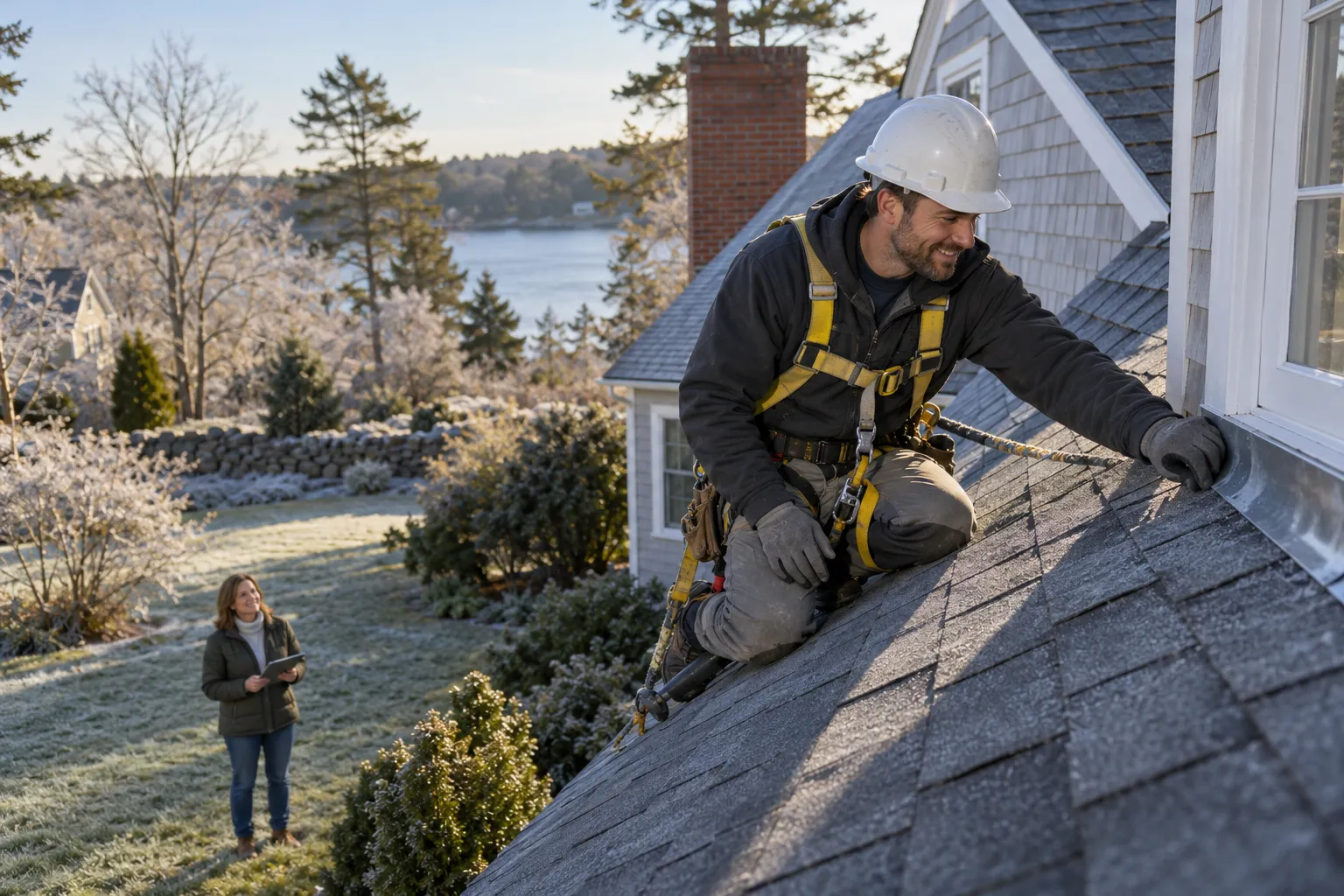
Roof repair fixes a specific problem on a roof that is otherwise in fair shape. Common repairs include replacing missing or cracked shingles, resealing or replacing flashing around chimneys and skylights, swapping worn pipe boots, and fixing small areas of soft roof deck. The goal is to stop water from getting in and to extend the life of the roof you already have.
Electricsuggestions Roofing is a referral service. When you call, we connect you with an independent local roofing contractor in the Gloucester area. The contractor inspects the roof, finds where water is getting in and explains what needs to be fixed. You get a written estimate before any work starts, and you stay in control of the decisions. A good repair can often buy a roof several more years. Before work begins, ask what caused the problem, what materials will be used and what warranty covers the repair.
Roof Leak? Start Here
If water is coming through your ceiling right now, focus on limiting the damage inside. Put a bucket or tub under the drip. Move furniture, rugs and electronics out of the way. If the ceiling is bulging with water, keep people and pets out of the room. Stay away from wet ceilings near light fixtures.
Do not climb onto the roof during or right after rain. Wet shingles are slippery, and a damaged roof deck may not hold your weight. Take photos of the stain and any water, then get a roofer on the way.
Why Small Roof Leaks Grow Fast
A roof leak rarely stays in one place. Water follows rafters, nails and the underside of the deck before it drips. The spot you see inside may be several feet from the actual hole. Here's how a leak usually gets worse over time:
The First Few Rains
Water soaks the underlayment and the wood roof deck. Insulation in the attic gets damp and starts to flatten. You may not see anything inside yet.
The Next Few Weeks
The ceiling drywall starts to stain and sag. Paint may bubble or peel. In warm, damp attics, mold can begin to grow on the deck and rafters.
Over Several Months
The roof deck can soften and rot. Nails lose their hold, so more shingles loosen. A repair that once needed a few shingles may now need new decking too.
That's why it pays to fix leaks early. A prompt repair is almost always smaller and cheaper than waiting.
Common Roof Repairs
Most roof repairs fall into a few main groups. The contractor will tell you which ones your roof needs.
- Shingle replacement. Missing, cracked or creased shingles are removed and replaced, ideally with a close color match.
- Flashing repair. Metal flashing around chimneys, skylights, vents and walls is resealed or replaced.
- Pipe boot replacement. Rubber collars around plumbing vents crack with age and are a frequent source of leaks.
- Roof deck repair. Soft or rotten plywood under the shingles is cut out and replaced.
- Ridge and hip repair. Loose or damaged ridge caps along the peaks are reset or replaced.
- Valley repair. The channels where two roof slopes meet carry a lot of water and can wear out first.
How a Roofer Finds the Leak
Finding a leak takes more than a quick look. A careful contractor will usually check:
The Attic
Water stains, damp insulation, dark spots on the deck and daylight between boards all point toward the source.
Roof Openings
Chimneys, skylights, vents and satellite mounts are common leak points. The contractor checks the flashing and sealant around each one.
The Shingles
Lifted tabs, cracked shingles, exposed nails and bare spots where granules have worn away are all signs of trouble.
Gutters and Edges
Clogged gutters and damaged drip edge can push water under the first rows of shingles.
Some contractors use a hose test, running water over one section at a time while someone watches from the attic. This helps pin down tricky leaks.
Repair or Replace?
Repair makes the most sense when the roof is in fair shape overall and the damage is limited to one area. A contractor may suggest replacement instead if:
- The roof is near the end of its expected life.
- Shingles are curling, cracking or losing granules on many slopes.
- You've had several leaks in different spots.
- The roof deck is soft in more than one area.
- The roof already has two layers of shingles.
There's no single right answer. Ask the contractor to explain the cost of both choices and how long each is likely to last.
Temporary Fixes
Sometimes a full repair can't happen right away, such as during a stretch of bad weather. In that case, a contractor may put a tarp or temporary patch over the damaged area. This can slow water down until a proper repair is possible. A tarp is not a long-term fix, so plan the permanent repair soon after.
Repairs on Different Roof Types
Most homes have asphalt shingles, and most repairs are on that kind of roof. Other materials need a slightly different approach. Metal roofs often leak at loose fasteners or worn seals, which can be tightened or replaced. Tile roofs can crack under foot traffic, so broken tiles are swapped out one at a time. Flat and low-slope roofs usually leak at seams and need patching with matching membrane. Tell the contractor what your roof is made of so they can plan the right materials.
Choosing a Roofing Contractor
When you're connected with a contractor through Electricsuggestions Roofing, you're talking with an independent local business. Ask a few questions before work begins:
- Are you licensed and insured for roofing work in Massachusetts?
- What do you think is causing the leak?
- Will the new shingles match the existing roof?
- Can I get a written estimate before you start?
- What warranty comes with the repair?
Clear answers are a good sign. You're never obligated to hire the first contractor you speak with.
Have a leak now? Call to check provider availability near you.
What's Included
Roof and Attic Inspection
The contractor checks the roof surface, openings and attic to find where water is getting in.
Shingle Replacement
Missing, cracked or creased shingles are replaced with the closest available match.
Flashing and Boot Repair
Flashing around chimneys, skylights and vents is resealed or replaced, along with worn pipe boots.
Deck Repair
Soft or rotten roof decking under the damaged area is cut out and replaced before new shingles go on.
What Does Roof Repair Cost?
Costs depend on the type of damage, the roof material, the pitch and how easy the area is to reach. The figures below are typical U.S. ranges that vary by job, so always ask for a written quote.
| Item | Typical range | Notes |
|---|---|---|
| Minor repair | $150 – $600 | A few shingles or a pipe boot |
| Average roof repair | $400 – $1,800 | Leak repair with some shingle and flashing work |
| Major repair | $1,500 – $7,000+ | Large area, decking work or steep pitch |
| Flashing repair | $200 – $1,000 | Chimney and skylight flashing cost more |
| Roof deck replacement | $3 – $7 per sq ft | Only where wood is soft or rotten |
| Emergency tarp | $200 – $1,000 | Temporary cover until repairs can be made |
How It Works
1. Call Electricsuggestions Roofing
Tell us about the leak or damage and where you are. We connect you with a local roofer.
2. Inspection and Estimate
The contractor checks the roof and attic, finds the cause and gives you a written estimate.
3. The Repair
Damaged shingles, flashing or decking are replaced, and the area is sealed against water.
4. Final Check
The contractor cleans up debris, checks the work and walks you through what was done.
Why Call Electricsuggestions Roofing
Faster Connection
One call routes you to a local roofer, so you spend less time searching while water gets in.
Local Knowledge
Contractors in our network work in the Gloucester area and know the roofs and weather here.
Written Estimates
Ask the contractor for a written estimate before work begins, so you know what to expect.
Your Choice
There's no obligation to hire. Ask questions and decide what's right for your home.